
A serious hailstorm doesn’t pick favorites. If the storm was strong enough to dent your car, it was almost certainly strong enough to damage your roof — and vice versa. The morning after a major hail event in St. Charles County, a significant number of homeowners walk outside to find dents across every panel of their vehicle and impact marks across their shingles at the same time.
The immediate question most people have is a practical one: is this one insurance claim or two? Do I call my auto insurer, my home insurer, or both? Will filing both hurt me? Can one contractor handle everything, or do I need to find two separate companies?
These are exactly the right questions to ask — and the answers are simpler than most people expect. This guide walks through everything you need to know about handling simultaneous car and roof hail damage, so you can move forward confidently instead of guessing.
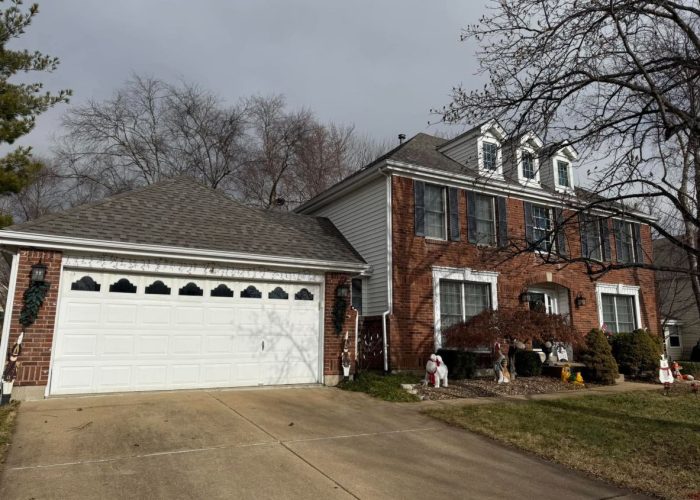
Your car and your home are covered by two completely different insurance policies — and hail damage to each is filed as a separate claim through the appropriate insurer.
The two claims do not interact with each other, do not share a deductible, and are processed completely independently. Filing one does not affect the other. Your auto insurer does not need to know about your roof claim, and your homeowners insurer does not need to know about your auto claim. They are separate events under separate policies, even if both were caused by the same storm on the same afternoon.
The fact that both were damaged in a single storm is a coincidence of timing — not a reason to combine them into one filing.
Auto hail damage is covered under the comprehensive portion of your auto insurance policy — not your collision coverage. This distinction matters because comprehensive claims are treated very differently from collision claims in terms of how they affect your rate.
Comprehensive coverage covers damage caused by events outside your control — hail, flooding, falling trees, fire, theft, and vandalism. Because hail is classified as an act of nature, filing a comprehensive claim for hail damage is considered a not-at-fault event. In Missouri, not-at-fault comprehensive claims typically do not raise your auto insurance premium the same way an at-fault accident does.
Here is what the auto hail claim process looks like:
Roof hail damage is filed through your homeowners insurance policy. Most standard homeowners policies in Missouri cover hail as a named peril — meaning hail damage is explicitly included in your coverage. However, how your policy pays out depends on whether you have replacement cost value (RCV) or actual cash value (ACV) coverage, and that difference can significantly affect your settlement amount.
If you’re not sure which type of coverage you have, look at your declarations page or call your agent before filing. Our guide to homeowners insurance and hail damage in Missouri covers this in full detail.
Beyond the coverage type, the roof claim process works like this:
You need two separate insurance claims — but you do not need two separate contractors.
Most homeowners dealing with simultaneous car and roof damage instinctively assume they need to find a roofing company for the house and an auto body shop for the car — two phone calls, two schedules, two sets of insurance paperwork, two contractors to track down if something goes wrong. That assumption is understandable, but it creates significantly more work and stress than necessary.
Competitive Hail Repair handles both. We are the only hail repair contractor serving St. Charles County that provides professional auto and roof hail repair under one roof — one inspection covering both your vehicle and your home, one team managing both insurance claims simultaneously, one point of contact throughout the entire process, and one lifetime workmanship warranty covering both repairs.
For a homeowner whose car and roof both took damage in the same storm, that means:
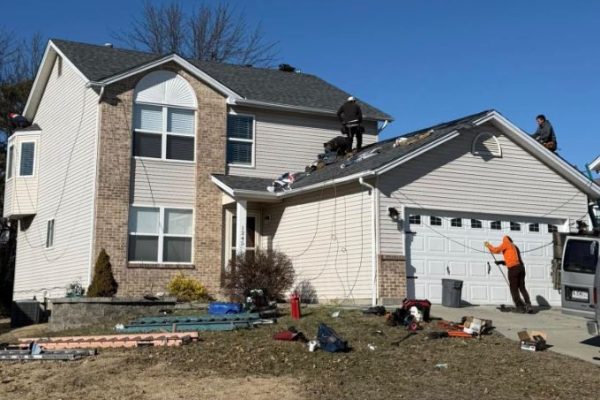
This is one of the most practical advantages Competitive Hail Repair offers — and for homeowners dealing with the stress of storm damage to both their home and vehicle at the same time, having one team handle everything is genuinely significant.
This is a question we hear regularly, and the answer depends on your specific situation — but in most cases, filing both claims is the right decision.
Here is the reasoning: your comprehensive auto coverage and your homeowners coverage operate completely independently. Filing one does not affect the other. You are already paying premiums on both policies. Hail damage is a covered peril under both. The only cost to you is your deductible on each claim.
The question of whether to file comes down to whether the repair cost exceeds your deductible. If your vehicle has $3,000 worth of hail damage and your comprehensive deductible is $500, filing the auto claim makes clear financial sense. If your vehicle has $600 worth of damage and your deductible is $1,000, filing may not be worth it. The math is the same for the roof claim.
What many Missouri homeowners don’t realize is that roof hail damage that looks minor often involves significantly more than is visible from the ground. A professional inspection frequently reveals damage worth $8,000–$20,000 or more on what appeared to be a lightly damaged roof — because the real damage is in granule loss and shingle bruising across large surface areas, not just the few visible cracks you can see from the driveway.
Getting a free professional inspection on both your roof and vehicle before making any filing decisions gives you the actual numbers — so your decision about whether to file is based on what the damage is actually worth, not what it looks like from street level.
Material quality problems typically surface six to eighteen months after installation — after the storm chaser has moved on and the local market has forgotten them. Shingles that appear correctly installed may have been fastened improperly, used with incompatible underlayment, or simply be a lower grade than what your insurance settlement was written to cover.
Warranty claims become impossible when the company is unreachable. A homeowner who discovers a leak eighteen months after a storm chaser’s repair has no practical recourse — the warranty is printed on paper but backed by nothing local.
Insurance complications can arise when a storm chaser begins repairs before your adjuster has documented the original damage condition. Once repairs have started, adjusters cannot assess the pre-repair state — which can result in a reduced settlement and out-of-pocket costs that the homeowner did not expect.
Deductible fraud exposure affects homeowners who accepted a deductible waiver offer. If your insurance company discovers the arrangement, it can void your claim, cancel your policy, or in serious cases refer the matter for fraud investigation.
Don’t sign anything at your door. After a major storm in St. Charles County, out-of-town storm chaser contractors knock on doors within hours — sometimes the same day. They offer fast inspections and push for contract signatures before homeowners have had time to assess anything. Do not sign a contractor agreement, a direction to pay, or an assignment of benefits at your door after a storm. Get your own inspection first.
Don’t file before you have independent documentation. Once your claim is open, the insurer’s adjuster sets the baseline. Items missed in that initial assessment are difficult to add later without your own documentation showing they were storm-related. Document first, then file.
Don’t assume your car damage isn’t worth filing. Auto hail damage from a significant storm is frequently more extensive than it appears. Dozens of small dents across a hood and roof can represent $3,000–$8,000 or more in repair value. A free inspection will tell you what the damage is actually worth before you decide.
Don’t accept the first settlement offer without review. Initial settlement offers — for both auto and roof claims — are frequently incomplete. Review any offer against your contractor’s documentation before accepting. Supplement requests are a normal and legitimate part of the claims process.
Don’t use two separate contractors if you don’t have to. Managing two parallel repair processes while also handling two insurance claims is significantly more stressful than it needs to be. If one contractor can handle both, use them.
The sooner your damage is professionally documented, the stronger your claim and the earlier you get on the repair schedule.
By the time a leak appears inside your home, the damage has already been compounding for some period. Proactive inspection protects both your property and your insurance options.
Policies vary by carrier and some have shorter reporting windows than others. A quick call to your insurance agent to confirm your claim filing window is worth the ten minutes.
If you have active water intrusion requiring immediate attention, temporary tarping is appropriate — and should be documented thoroughly. But permanent repairs should not begin before your independent inspection and insurance documentation are in place.
Before you authorize any contractor to begin work or sign any agreement after a hailstorm in St. Charles, ask these questions directly:
You want a specific answer — not “we serve the St. Louis area.” A contractor who genuinely operates locally can tell you exactly how long they have been in business here.
Legitimate contractors produce this immediately. Any hesitation is a warning sign.
This is one of the most important services a hail repair contractor can provide. A contractor who declines or is unfamiliar with this process is leaving money on the table in your insurance settlement.
Deductible assistance is a real and legal option when handled properly. Deductible waivers are not. A contractor who cannot explain the difference — or who becomes evasive when asked — is telling you something important.
Going to their office to sign the contract gives you the opportunity to take inventory of signs they have genuinely been there for years. A real local business welcomes this. A storm chaser will give you reasons it is not necessary.
The answer to this question separates contractors with real local accountability from those who will not be around to honor the warranty they are selling you on today.
When you call Competitive Hail Repair after a storm that hit both your car and your home, here is what happens:
We schedule a free inspection — typically within 24 to 48 hours of your call. One of our team members inspects both your roof and your vehicle in a single visit, documenting all damage with photos, written notes, and measurements for both. You receive documentation for both your homeowners and auto insurance claims from a single inspection appointment.
We attend the adjuster meeting with you — for both your roof and vehicle if needed — making sure nothing is missed or undervalued in either assessment.
We review both settlement offers against our documentation and advise you on whether supplements are warranted for either claim.
We complete both repairs — auto PDR and roof replacement or repair — under one coordinated timeline, with one warranty covering everything.
You make one call. We handle the rest.
📞 636-448-3818 | 📍 2802 Greenleaf Dr, St. Charles, MO 63303
We serve St. Charles, O’Fallon, St. Peters, Wentzville, Lake St. Louis, Dardenne Prairie, Cottleville, Weldon Spring, Foristell, and surrounding communities throughout St. Charles County.