
A hailstorm hits your neighborhood. You walk outside the next morning and see dents in your car, marks on your roof, and damage to your gutters. You know you need to file a claim — but you’re not sure where to start, what to photograph, or what order to do things in.
The documentation step is the one most Missouri homeowners either skip entirely or do too casually — and it’s the step that determines whether your claim pays out fully, gets partially denied, or gets lowballed to the point where the settlement doesn’t cover what the repair actually costs.
This guide walks you through exactly how to document hail damage the right way — before you call your insurance company, before the adjuster arrives, and before you sign anything.
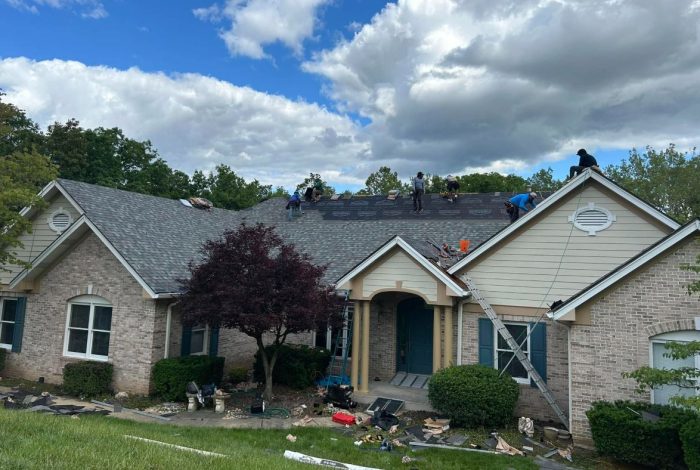
Your insurance company sends an adjuster to assess the damage. That adjuster works for the insurance company. Their job is to identify covered damage — but they are also working quickly, often seeing multiple properties in a single day, and the items they miss or undervalue in their initial assessment become your problem, not theirs.
When you have your own thorough documentation in place before the adjuster arrives, everything changes. You have a timestamped record that exists independently of what the adjuster finds. You have photos showing damage the adjuster might overlook from the ground. You have a basis for comparison when the settlement offer arrives — and documentation to support a supplement request if the initial offer falls short.
Homeowners who document thoroughly get better claim outcomes. It is not complicated — but it requires doing it before you call your insurer, not after.
Your insurance policy covers specific storm events. The date of loss on your claim must match an actual storm event — and your insurer will verify this against weather service records.
Before you document anything, confirm and record:
You can find this information through the National Weather Service storm report archive at weather.gov, or by simply noting the date and searching local news coverage of the storm. Save this information — you’ll reference it when you file your claim.
If you’re unsure exactly when the hail fell or whether what you’re seeing is from a recent storm versus an older one, a professional inspection can help determine the approximate age of impact damage based on oxidation and granule loss patterns.
This is the single most important rule: document before you disturb. Do not sweep up hailstones, do not remove debris from your roof, and do not move your vehicle until you have photographed everything.
Photograph your roof from the ground first — walking around all four sides of your home with your camera. Capture the full expanse of each roof plane. Then, if you can safely access your roof, photograph individual shingles showing:
Do not get on the roof if you are not comfortable doing so. Photograph from the ground and from a ladder at the eave line. A professional inspection will capture what you cannot safely reach — the goal at this stage is to create a timestamped photographic record, not a complete damage inventory.
Walk around every panel of your vehicle methodically:
For each panel, photograph both from a distance (showing the full panel) and up close on individual dents. Use a light source at a low angle — early morning or late afternoon sunlight, or a work light held at the side — to make individual dents visible in the photo. Dents that are invisible in flat light show clearly when light rakes across the surface at an angle.
Use your phone’s camera (which automatically embeds date and time in the image file) or photograph a handwritten note with the date in the frame. If your claim is ever disputed, timestamped photos taken the morning after the storm are significantly stronger evidence than photos with no recorded date.
If hailstones are still present — in gutters, on the ground, on window sills — photograph them before they melt and include a size reference. A quarter, a golf ball, or a ruler in the same frame establishes size at a glance and is useful documentation for your adjuster.
Look around your property for secondary evidence of impact:
All of this supports your claim by establishing the intensity of the event across your property — not just on the surfaces you’re claiming.
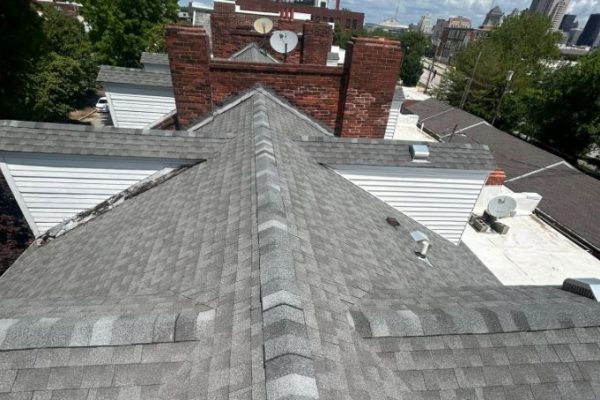
This step surprises most Missouri homeowners — but it is the step that professional public adjusters and experienced contractors will all tell you matters most.
Get an independent professional inspection completed before you contact your insurance company to open a claim.
Here is why this sequence matters: once you open a claim, your insurer schedules their own adjuster. That adjuster’s report becomes the baseline for your settlement. If their report misses items, undervalues damage, or categorizes hail damage as pre-existing wear, that baseline is hard to move. Many homeowners accept the initial adjuster’s report as final because they do not have independent documentation showing otherwise.
When you have a professional inspection report in hand before the adjuster arrives, you have a second independent assessment that was completed first — before any insurer involvement. The adjuster knows you have documentation. Items cannot be quietly omitted. And if the settlement offer falls short of what your inspection documented, you have clear grounds for a supplement request.
A professional inspection from Competitive Hail Repair is free, no-obligation, and typically completed within 24–48 hours of a storm event. We document every impact point on your roof and vehicle with photos, measurements, and written notes — the same documentation that supports your claim from first contact through final settlement.
→ Does Homeowners Insurance Cover Hail Damage in Missouri? Read our complete guide
Photographs capture what damage looks like. Written notes capture context that photos cannot.
After photographing your property, write down — in as much detail as you can — everything you observed. Include:
This written record does not need to be formal or polished. Its purpose is to exist independently of the adjuster’s report and reflect what you personally observed in the hours immediately after the storm.
If the storm caused immediate water intrusion — a broken skylight, a torn section of flashing, or visible roof penetration — you are permitted under most Missouri homeowners policies to make temporary repairs to prevent further damage before the adjuster visits. In fact, your policy likely requires you to take reasonable steps to prevent additional damage.
If you make temporary repairs:
Temporary repairs — tarping, boarding, covering openings — are typically reimbursable under your claim. Permanent repairs completed before the adjuster visit can complicate your claim because the damage is no longer visible for assessment.
Before you contact your insurance company to open the claim, organize what you have:
When you call your insurer with this documentation already in hand, you are not starting from zero. You have evidence. You know what was damaged. And you are in a position to provide your own documentation alongside whatever the adjuster finds — rather than relying entirely on the adjuster’s assessment to determine the outcome of your claim.
Once your claim is open, your insurer will schedule an adjuster visit — typically within a few business days to two weeks after filing, depending on how many claims were filed in your area following the storm.
If you have worked with Competitive Hail Repair, we attend the adjuster meeting with you. We walk the roof together, point out every impact site we documented, and make sure nothing is missed or undervalued during the inspection. When the settlement offer arrives, we review it against our own documentation and advise you on whether it fully covers the scope of repair or whether a supplement request is warranted.
Most homeowners who handle the adjuster meeting alone — without their contractor or an independent advocate present — receive lower initial settlement offers than those who have a professional present. It is not adversarial. It is simply the difference between one set of eyes and two.
Material quality problems typically surface six to eighteen months after installation — after the storm chaser has moved on and the local market has forgotten them. Shingles that appear correctly installed may have been fastened improperly, used with incompatible underlayment, or simply be a lower grade than what your insurance settlement was written to cover.
Warranty claims become impossible when the company is unreachable. A homeowner who discovers a leak eighteen months after a storm chaser’s repair has no practical recourse — the warranty is printed on paper but backed by nothing local.
Insurance complications can arise when a storm chaser begins repairs before your adjuster has documented the original damage condition. Once repairs have started, adjusters cannot assess the pre-repair state — which can result in a reduced settlement and out-of-pocket costs that the homeowner did not expect.
Deductible fraud exposure affects homeowners who accepted a deductible waiver offer. If your insurance company discovers the arrangement, it can void your claim, cancel your policy, or in serious cases refer the matter for fraud investigation.
Waiting too long to document. Hailstones melt, granules wash off in rain, and the visual evidence of a storm fades faster than you expect. Document the day of or the morning after — not a week later.
Only photographing obvious damage. Hail damage is often subtle — especially on roofing. A shingle that looks intact from the ground may have significant bruising and granule loss that only shows up in close-up photos or under proper lighting.
Opening the claim before getting an independent inspection. Once the adjuster’s baseline is set, raising it requires documented grounds. Getting the inspection first costs you nothing and gives you significant leverage.
Accepting the first settlement offer without reviewing it. Initial offers are frequently incomplete — especially after large storm events where adjusters are working through a high volume of claims. Review any settlement offer against your own documentation or your contractor’s assessment before accepting.
Signing with the first contractor who knocks on your door. After a storm, out-of-town contractors flood St. Charles County neighborhoods. Do not sign anything at your door. Do your documentation first, get an independent inspection from a local contractor you’ve verified, and make decisions without pressure.
The sooner your damage is professionally documented, the stronger your claim and the earlier you get on the repair schedule.
By the time a leak appears inside your home, the damage has already been compounding for some period. Proactive inspection protects both your property and your insurance options.
Policies vary by carrier and some have shorter reporting windows than others. A quick call to your insurance agent to confirm your claim filing window is worth the ten minutes.
If you have active water intrusion requiring immediate attention, temporary tarping is appropriate — and should be documented thoroughly. But permanent repairs should not begin before your independent inspection and insurance documentation are in place.
Before you authorize any contractor to begin work or sign any agreement after a hailstorm in St. Charles, ask these questions directly:
You want a specific answer — not “we serve the St. Louis area.” A contractor who genuinely operates locally can tell you exactly how long they have been in business here.
Legitimate contractors produce this immediately. Any hesitation is a warning sign.
This is one of the most important services a hail repair contractor can provide. A contractor who declines or is unfamiliar with this process is leaving money on the table in your insurance settlement.
Deductible assistance is a real and legal option when handled properly. Deductible waivers are not. A contractor who cannot explain the difference — or who becomes evasive when asked — is telling you something important.
Going to their office to sign the contract gives you the opportunity to take inventory of signs they have genuinely been there for years. A real local business welcomes this. A storm chaser will give you reasons it is not necessary.
The answer to this question separates contractors with real local accountability from those who will not be around to honor the warranty they are selling you on today.
If your home or vehicle was in the path of a recent hailstorm in St. Charles County, Competitive Hail Repair will inspect both your roof and vehicle at no charge — documenting all damage, providing a written inspection report, and walking you through exactly what the insurance process looks like for your specific situation.
We serve St. Charles, O’Fallon, St. Peters, Wentzville, Lake St. Louis, Dardenne Prairie, Cottleville, Weldon Spring, Foristell, and surrounding communities.