
A hailstorm rolls through St. Charles. The sky clears. You walk outside, look up at your roof, and see… nothing obviously wrong.
Does that mean your roof is fine?
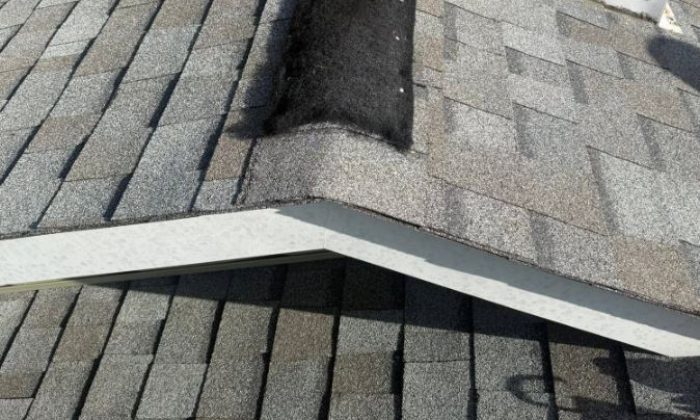
Not necessarily. Roof hail damage is one of the most deceptive home problems Missouri homeowners face — because the most serious damage is almost never visible from the ground. The shingles that look intact from your driveway may have taken dozens of direct hail impacts that have fractured the protective granule layer, cracked the fiberglass mat underneath, and created invisible moisture entry points that will not show up as a leak until months — or even years — later.
This guide walks you through exactly what to look for after a hailstorm in St. Charles — what you can assess safely from the ground, what only a professional inspection can find, and how to know when it is time to call for help.
The challenge with hail damage is that it does not look like you might expect. There is no obvious hole. No missing shingles flying off. No dramatic collapse.
What hail actually does to an asphalt shingle roof is more subtle — and more dangerous for exactly that reason.
When a hailstone impacts an asphalt shingle, it does two things simultaneously. First, it dislodges granules — the small mineral particles embedded in the shingle’s surface that protect the underlying fiberglass mat from UV exposure and moisture. Second, it creates a bruise in the fiberglass mat itself — a soft spot or micro-fracture that may not be visible to the eye but has permanently compromised that section of the shingle’s structural integrity.
The granule loss is the immediate problem. The bruising is the long-term problem.
Once granules are knocked loose, UV rays from the Missouri sun begin accelerating the deterioration of the exposed fiberglass mat. Over weeks and months, that exposed section hardens, cracks, and curls — eventually allowing water to penetrate through the shingle into your roof deck. By the time a visible stain appears on your ceiling, significant damage has already occurred to the decking, insulation, and potentially the structural framing below.
This is precisely why hail damage often does not produce visible leaks for months or even years after the storm — making timely professional inspection after any significant hail event genuinely important, not just a formality.
You do not need to get on your roof to gather useful evidence of hail impact. In fact, do not attempt to access your roof yourself after a storm — wet roofing surfaces are extremely slippery, and post-storm conditions create significant fall risk. Leave the roof-level inspection to professionals.
Here is what you can assess from the ground and around your property:
Your gutters are your single most reliable ground-level indicator of hail impact severity. Soft aluminum gutters dent visibly when struck by hail — and the size and density of those dents tells you a great deal about what your roof experienced during the same storm.
Walk around your home and inspect all gutters and downspouts closely:
Dents, cracks, and chips in gutters combined with granules washed into them are among the clearest telltale signs that your roof has experienced hail damage requiring inspection.
Your outdoor air conditioning unit sits in the open and takes direct hail hits — making it a reliable indicator of hail size and force. Walk around the unit and look for:
If your AC unit shows clear denting, your roof almost certainly experienced significant hail impact. This is one of the most reliable secondary indicators roofing professionals use to confirm hail events on insurance claims.
Other soft metal surfaces worth checking: metal chimney caps, satellite dish mounting hardware, metal vents and exhaust covers, and any decorative metal elements on the exterior of your home.
Vinyl siding, aluminum trim, and window frames show hail impacts as round indentations or small circular cracks. If you see these on the side of your home facing the prevailing storm direction — typically from the southwest or northwest in St. Charles — your roof on that side very likely sustained similar impact patterns.
If your car was outside during the storm, walk around it slowly in good natural light — angled sunlight works best for revealing shallow dents in body panels. Denting on the hood, roof, and trunk lid of your vehicle is one of the strongest confirming indicators of significant hail impact on your property overall.
This is also relevant if you are planning to file an insurance claim — documenting vehicle damage at the same time as roof damage builds a stronger case for the storm’s severity and gives your adjuster cross-reference evidence for both claims.
Here is a practical technique you can use: take the side of a standard piece of chalk and wipe it across a flat metal surface like your gutter face or a downspout. Areas that do not pick up chalk are likely impact divots from hail — small concave dents that are visible once you know what you are looking for.
This test works well on painted surfaces and helps identify shallow impacts that are not immediately obvious to the naked eye.
Before the storm has had time to cause a visible ceiling stain, your attic may already show early evidence of roof compromise. After a significant hailstorm, check your attic for:
Ground-level signs tell you whether a professional inspection is necessary. They do not tell you the full story of what your roof actually experienced.
The following types of hail damage require a licensed roofing professional to identify — and they are almost always present after any significant hail event in St. Charles, even when the roof appears fine from the ground:
Shingle bruising: The soft spots created by hail impact are detectable by hand — a trained roofing professional walking your roof can feel the subtle give of a bruised shingle mat beneath their foot. Experienced roofers can often identify granule damage by the crunching beneath their feet as they walk on your roof — something completely inaccessible from ground level.
Granule pattern mapping: Hail damage creates a random scatter pattern of granule loss across the shingle surface — distinguishable from normal wear patterns that tend to be more uniform. A professional inspection identifies and photographs this pattern in a way that is defensible to an insurance adjuster.
Cracked shingle matting: Hairline fractures in the fiberglass mat beneath the granule surface require close-up inspection to identify. These cracks allow water penetration that does not manifest as a leak immediately, but creates long-term vulnerability that worsens with each freeze-thaw cycle.
Flashing damage: Metal flashing around chimneys, vents, pipe boots, and skylights dents and deforms under hail impact. Damaged flashing creates direct water entry points that are one of the leading causes of indoor leaks after storms — and are not visible from the ground.
The 10-strike insurance threshold: Insurance adjusters use a test square method — typically a 10-foot by 10-foot section of your roof — to assess hail damage density. If 10 or more hail strikes are documented within a single test square, your insurance company will typically approve full replacement for that roof slope. A professional inspection documents these strike counts in a format your insurance adjuster recognizes and respects.
Not all hailstorms cause roof damage — and knowing the approximate size of the hail that hit St. Charles during a storm gives you a useful first indicator of whether a professional inspection is warranted.
A general rule of thumb is that if hail is quarter-sized or above, a professional roof inspection is strongly recommended. However, smaller hail can also cause roof damage when combined with strong winds or high storm density — so do not rule out damage based on size alone.
You can check the verified hail size for your specific area using the National Weather Service records or Storm Prediction Center reports for your zip code after any significant storm event in St. Charles.
If your ground-level inspection reveals dented gutters, granules in downspouts, AC unit impacts, or vehicle dents — treat these as confirmation that a professional roof inspection is necessary. Do not wait for a ceiling stain to appear.
Here is what to do next:
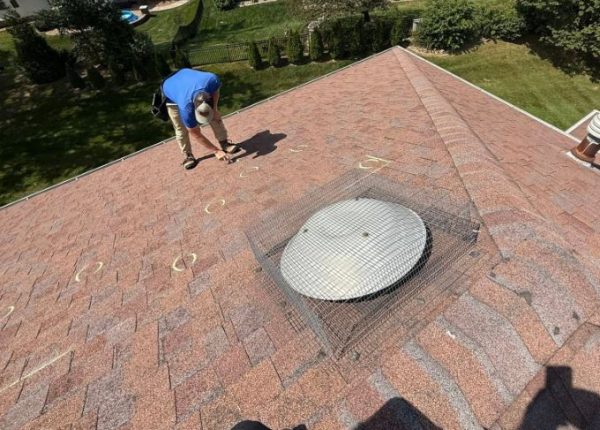
At Competitive Hail Repair, our free roof hail inspection in St. Charles covers every component of your roof system that is vulnerable to storm damage:
We photograph all damage in detail, provide a written assessment report, and submit all documentation directly to your insurance company — so you have independent professional evidence of your roof’s post-storm condition before the adjuster arrives.
Most hail damage does not create an immediate emergency — but some situations do require urgent attention. Contact us immediately for emergency roof repair in St. Charles if:
In these situations, every hour of delay allows additional water intrusion and potential mold growth. Do not wait for a normal inspection appointment.
Storm-related vs. pre-existing damage: Insurance covers sudden and accidental storm damage — not gradual deterioration, normal wear and tear, or pre-existing issues. Adjusters will assess whether visible damage was caused by the specific storm event or existed before it.
Documentation of the storm event: Tying your roof damage to a specific storm date with photos, weather service records, and a professional inspection report is critical. Without documentation connecting your damage to a specific hail event, insurers have grounds to classify it as wear and tear and deny or reduce your claim.
Cosmetic vs. functional damage: Some Missouri policies limit or exclude coverage for cosmetic hail damage — dents and dings that affect appearance but do not compromise the roof’s waterproofing function. A professional inspection determines whether damage crosses from cosmetic into functional territory, which matters significantly for your claim outcome.
Age and maintenance history of the roof: Adjusters look at the condition of your roof relative to its age. A well-maintained roof with documented service history presents a stronger claim than a neglected roof where the adjuster can argue storm damage is indistinguishable from long-term deterioration.
Most Missouri homeowners insurance policies require claims to be reported promptly after the storm event. While Missouri’s statute of limitations on insurance contracts is 5 years, filing quickly after the storm gives you the strongest documentation and the best claim outcome. Do not wait months to report damage.
It may. Filing a successful hail claim can cause your insurer to classify you as a higher-risk customer, potentially raising your premium at renewal. However, hail is an act of nature, not negligence — a single claim is unlikely to cause a dramatic rate increase. Multiple claims within a 2-3 year period carry more risk of significant premium impact.
If an adjuster concludes there is no covered damage but your contractor’s independent inspection shows significant hail impact, you can request a re-inspection, bring in a public adjuster who works on your behalf, or file a complaint with the Missouri Department of Insurance. Having a documented independent inspection report is essential for this process.
Yes — even dents that are repaired through traditional body shop methods can appear on Carfax and reduce resale value. Paintless dent repair (PDR), the method our auto hail repair team uses, preserves your factory paint finish and leaves no reportable repair record, protecting your vehicle’s resale value fully.
If your St. Charles home was in the path of a recent hailstorm — even if you cannot see obvious damage from the ground — a professional inspection is the only reliable way to know what your roof actually experienced.
Competitive Hail Repair provides free, no-obligation roof hail inspections throughout St. Charles, St. Peters, O’Fallon, Wentzville, Cottleville, Lake St. Louis, and surrounding greater St. Louis communities. We document all findings, provide a written report, and handle your insurance claim from start to finish if repairs are needed.
📞 Call: 636-448-3818 📍 2802 Greenleaf Dr, St. Charles, MO 63303