
⚠️ Missouri's peak hail season runs April through August.
Waiting until after a storm means longer waits, higher demand pricing, and damage that's already spreading through your decking. This guide shows you what to do now — so you're protected when it counts.
What’s in this guide
Missouri sits at the crossroads of two colliding air masses — warm, moist air pushing up from the Gulf and cold fronts dropping down from the Rockies. That collision is a hail factory. Unlike coastal states that rarely see large hail, Missouri homeowners deal with the real thing: golf-ball-sized stones, storm cells that stall over neighborhoods, and damage that looks minor on the surface but has already cracked your roof’s structural integrity below.
Most homeowners only hear about hail when a neighbor files a claim. By then, your roof may have already taken hits from storms you never noticed — and each one shortens its remaining life.
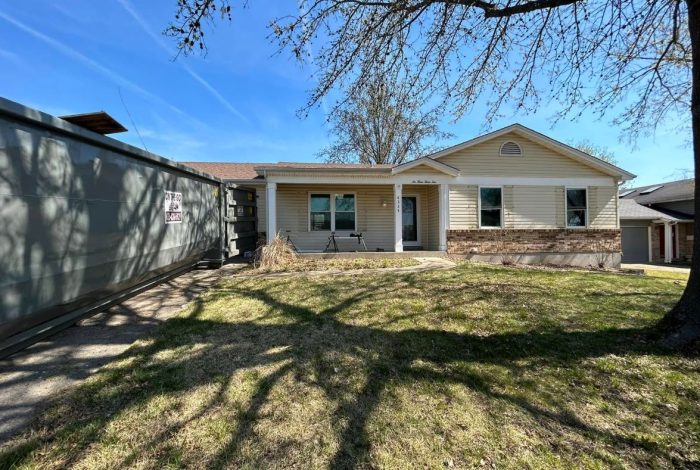
Missouri ranks among the most hail-active states in the US annually
Peak hail window — 5 months where your roof faces the most risk
Quarter-size hail — the threshold where shingle granule loss becomes serious
Ideal window to document storm damage before it blends with pre-existing wear
What most roofing articles won’t tell you: Hail damage is cumulative. A roof that took 1″ hail last spring and 1.5″ hail this summer has been hit twice — but most insurers look for damage from a single “storm event.” Getting a documented inspection after each storm is what builds a paper trail that supports your claim.
Know before you climb
You don’t need to be on your roof to spot most of these. Walk your property and check each one now — before a storm does it for you.
Shingle granules in your gutters. If you’re scooping out a significant amount of dark, sandlike granules during gutter cleaning, your shingles are shedding their protective coating. That leaves bare asphalt exposed to UV, heat, and impact — a single hailstorm can cause exponentially more damage on stripped shingles.
Curling or cupping at shingle edges. This is a moisture and aging problem. Shingles that are already deformed don’t absorb hail impact — they crack and split on the first direct hit. Don’t wait until you see a ceiling stain; by then, water has been working through your decking for months.
Daylight visible in your attic. Check your attic on a sunny day. Any light coming through the roof boards means there’s a gap. Hail-driven rain gets in fast through even the smallest opening and starts rotting your decking within days.
Soft or spongy decking when you walk the roof. That soft feeling underfoot is rotted or waterlogged OSB decking — a compounding problem that makes hail damage far more expensive to repair because the decking needs to be replaced too, not just the shingles.
Your roof is 15+ years old and was never inspected after a storm. Most asphalt shingle roofs are rated for 20–30 years — but that rating assumes regular inspection and minor repairs along the way. An uninspected 15-year-old roof in Missouri has almost certainly taken unreported storm damage that cut years off its life.
What to do right now
These are the steps we walk homeowners through every spring. Not all of them require a contractor — but the ones that do are worth doing before the first April storm, not after.
A professional inspection creates the paper trail your insurance company will expect. We check flashing, valleys, penetrations, and shingle condition — the areas most likely to fail under hail impact.
Flashing around chimneys, skylights, and pipe boots is the #1 source of leaks after a hail storm. A cracked bead of caulk or a lifted flashing is a direct water path into your home.
A single missing shingle exposes the felt underlayment and decking to direct impact. Replacing it costs $150–$400. Replacing the rotted decking section it leads to costs 5–10x more.
We offer free pre-season inspections for Missouri homeowners — no sales pressure, just an honest assessment.
Get a free inspection ↗This is where most Missouri homeowners leave money on the table. Insurance claims have time windows, documentation requirements, and denial triggers that the average homeowner doesn’t know about — until it’s too late.
Get a professional inspection with a written report and photos. This establishes your roof's pre-storm baseline — critical if your insurer tries to call damage "pre-existing wear."
Photograph everything you can see safely from the ground: dented gutters, damaged window screens, marks on siding, stripped shingles. These "soft metal" indicators are the fastest way to verify a hailstorm hit your property.
Most homeowners do this backwards — they call their insurer first, then get a contractor. We recommend the opposite. Knowing exactly what's damaged (and having documentation) means you go into the claims process informed, not dependent on the adjuster's assessment.
A licensed contractor at your adjuster walkthrough changes the dynamic. We can point to damage that's easy to miss and ensure every item is documented before the adjuster writes their estimate.
Insurance estimates are often incomplete. Missouri homeowners have the right to supplement claims when scope of work expands during repairs. We handle this process for you at no additional cost.
Storm just hit?
The actions you take immediately after a hail storm can protect both your home and your insurance claim. Here’s the sequence:
Know before you climb
You don’t need to be on your roof to spot most of these. Walk your property and check each one now — before a storm does it for you.
Out-of-state contractors flood Missouri after major weather events. They take your deposit, do minimal work, and are unreachable when the repairs fail. Use a licensed, locally established contractor who will be here for the warranty work in three years.
Some contractors ask you to sign over your insurance rights before any work is done. You lose control of your claim, your settlement, and sometimes your ability to dispute poor workmanship. Read everything before signing.
By the time water stains appear on your ceiling, the damage has already moved through your shingles, underlayment, decking, insulation, and ceiling. Early detection costs a fraction of the repair bill that follows delayed action.
Insurance adjusters are often stretched thin after a major storm event. They may miss damage that a roofing contractor would spot immediately. An independent inspection before your adjuster visits ensures nothing is left off the estimate.
Material quality problems typically surface six to eighteen months after installation — after the storm chaser has moved on and the local market has forgotten them. Shingles that appear correctly installed may have been fastened improperly, used with incompatible underlayment, or simply be a lower grade than what your insurance settlement was written to cover.
Warranty claims become impossible when the company is unreachable. A homeowner who discovers a leak eighteen months after a storm chaser’s repair has no practical recourse — the warranty is printed on paper but backed by nothing local.
Insurance complications can arise when a storm chaser begins repairs before your adjuster has documented the original damage condition. Once repairs have started, adjusters cannot assess the pre-repair state — which can result in a reduced settlement and out-of-pocket costs that the homeowner did not expect.
Deductible fraud exposure affects homeowners who accepted a deductible waiver offer. If your insurance company discovers the arrangement, it can void your claim, cancel your policy, or in serious cases refer the matter for fraud investigation.
Policies vary by carrier and some have shorter reporting windows than others. A quick call to your insurance agent to confirm your claim filing window is worth the ten minutes.
If you have active water intrusion requiring immediate attention, temporary tarping is appropriate — and should be documented thoroughly. But permanent repairs should not begin before your independent inspection and insurance documentation are in place.
Hail damage leaves specific markers: circular impact points with bruised or missing granules, cracked or split shingles at the point of impact, and dented soft metals (gutters, vents, AC fins). Wear shows as overall granule loss across large areas, cracking along seams from UV, or lifting at edges from heat cycling. A trained contractor can distinguish the two clearly — and that distinction matters for your insurance claim.
Our pre-season inspections are genuinely free — no fee, no obligation, and no pressure to schedule work unless your roof needs it. We do this because we want to be the contractor you call when something does go wrong. Building that relationship matters more to us than squeezing a fee out of an inspection visit.
Yes — get an inspection. Hail damage varies house to house based on roof pitch, age, shingle type, and the direction the storm traveled across your neighborhood. Your neighbor filing a claim doesn’t automatically mean your roof was damaged, but it does mean that storm event is well-documented and verified, which makes the claims process faster if damage is found on your property.
Most Missouri homeowner policies require you to file within one year of the storm event, but some policies are stricter — 6 months from discovery or from the storm date. Don’t assume you have time. Check your policy’s “prompt notice” clause and contact us for an inspection if you’re unsure how old the damage is.
Plenty of prep is DIY-friendly: gutter cleaning, branch trimming, photographing your roof from the ground, reviewing your insurance policy. What you need a contractor for: walking the roof, inspecting flashing and penetrations, replacing damaged shingles, and anything that involves going above the gutterline. The risk of a fall combined with the risk of missing damage makes the professional inspection worth it.
A free pre-season inspection takes 30–45 minutes and gives you a written report of your roof’s current condition. No obligation. No sales pitch. Just an honest assessment from a local Missouri contractor who will still be here after the storm.