
The storm passed twenty minutes ago. The sky’s clearing, your driveway is covered in ice, and you’re standing at the window trying to figure out what you’re actually supposed to do right now. Most guides online give you generic advice written for nowhere in particular. This one is written specifically for what we see, walk into, and fix after hail hits O’Fallon — and it’s organized in the order you’d actually need it, starting with the next ten minutes.
We’re Competitive Contractors LLC, and this is the same sequence we walk O’Fallon homeowners through on storm calls. No filler, no generic checklist copied from somewhere else.
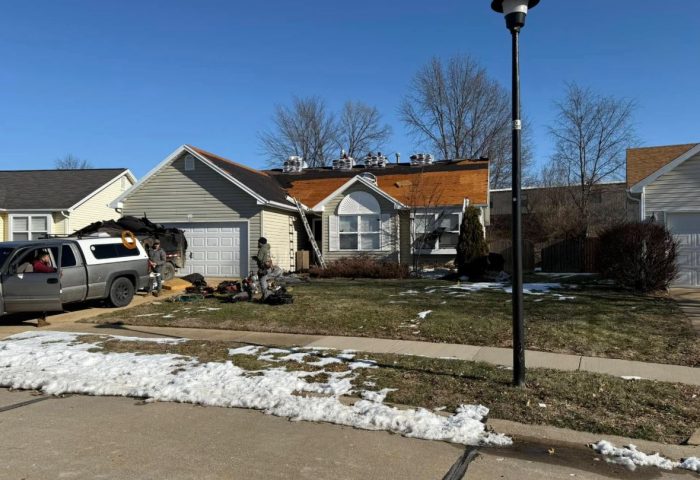
Stay inside until the storm has fully passed, including any lingering wind gusts that often follow a hail cell. Once it’s safe, do a quick walk-through of your home’s interior, specifically your attic if you have access, and any upper-floor ceilings. You’re checking for anything that wasn’t there before: a damp spot, a drip, a new stain, or a sound of water you didn’t have before the storm.
If you do find active water coming in, place a bucket or container under it immediately and, if it’s safe to do so, move anything valuable out of the path. This isn’t about fixing the roof yet. It’s about limiting interior damage while you figure out next steps.
Walk your property’s exterior and take photos of anything visibly affected. In O’Fallon, the most common ground-level hail indicators we find are dented gutters and downspouts, bent or torn window screens, dinged siding or trim, and damaged AC condenser units, particularly the thin metal fins on the side facing the storm’s direction.
Take wide shots of each side of the house and close-up shots of specific damage. Date and time stamps matter here, so make sure your phone’s location and timestamp settings are on. This documentation becomes useful in two ways: it helps a contractor understand storm severity before they even arrive, and it builds a record that supports an insurance claim if your roof did take real damage.
We get this question constantly: can I just go up and look myself? We’d rather you didn’t, and not as a liability disclaimer, but because it’s genuinely not safe. A hail-soaked roof is slick, sometimes structurally weakened in spots you can’t see, and walking it yourself risks turning a roofing problem into a fall injury. It also risks stepping directly on damage that’s already fragile, making it worse before a professional ever gets there.
What you can safely do is call a contractor the same day, even if it’s just to get on the schedule. After a significant hailstorm in O’Fallon, inspection requests spike fast, and getting your name down early means you’re not waiting weeks while damage you can’t see continues quietly getting worse.
This window matters more than most homeowners realize. A roof inspection soon after the storm gives you a clean, accurate read on what actually happened, before weather, time, or normal wear blur the picture. It also puts you ahead of the curve if a claim becomes necessary, since insurers want to see damage assessed close to the storm date, not months later when causation gets harder to prove.
When Competitive Contractors LLC inspects a roof after a hail event in O’Fallon, we’re checking shingle granule loss and bruising, soft spots from impact fractures, flashing around chimneys and vents, and the condition of gutters, downspouts, and any exposed metal. We document everything with photos and a written report, regardless of whether the damage turns out to be significant or minor. You deserve a straight answer either way, not a sales pitch dressed up as an inspection.
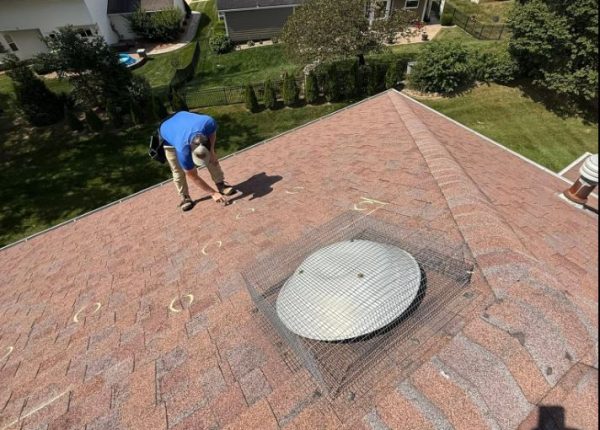
Here’s something most articles skip entirely: consider getting your contractor’s inspection done before you file with your insurer, not after. Walking into that claims conversation already knowing exactly what’s damaged, with photos and a written report in hand, puts you in a stronger position than going in blind and hoping the adjuster catches everything.
If a claim does make sense, ask whether your contractor can be present during the adjuster’s visit. Adjusters in O’Fallon often handle a high volume of inspections in the days following a major storm, and having someone there who specializes specifically in roofing can mean the difference between a complete damage assessment and a rushed one.
If your inspection turns up an active leak or exposed decking, a temporary tarp is usually the right move before any permanent repair work begins. This isn’t a DIY ladder project. A professional tarp installation is secured properly against wind and additional rain, and in most cases it’s treated as a covered emergency measure under standard homeowner policies. Competitive Contractors LLC can typically get a tarp on the same day for O’Fallon homeowners dealing with an active leak.
After any significant hailstorm in the O’Fallon and greater St. Charles County area, it’s common to see unfamiliar trucks and door-to-door solicitors offering immediate roof inspections. Some are legitimate. Many are out-of-state crews following storm systems from one region to the next, here for a few weeks and gone before any warranty issue ever surfaces.
It’s worth asking a simple question before letting anyone on your roof: are you local, and will you still be reachable here in a year if something needs attention? Competitive Contractors LLC has been doing this work in O’Fallon and the surrounding St. Charles County communities long before this storm and will be here long after it.
We’ve covered this in more detail elsewhere, but it’s worth repeating briefly here: hail damage that isn’t addressed doesn’t stay the same size. Small cracks widen with normal temperature swings, minor moisture intrusion gradually saturates the underlayment beneath your shingles, and what starts as a handful of damaged shingles can, over months, become a much larger repair involving decking and interior damage. The inspection you get this week is almost always cheaper than the repair you’d need if you wait until next year.
Don’t sign anything at your door. After a major storm in St. Charles County, out-of-town storm chaser contractors knock on doors within hours — sometimes the same day. They offer fast inspections and push for contract signatures before homeowners have had time to assess anything. Do not sign a contractor agreement, a direction to pay, or an assignment of benefits at your door after a storm. Get your own inspection first.
Don’t file before you have independent documentation. Once your claim is open, the insurer’s adjuster sets the baseline. Items missed in that initial assessment are difficult to add later without your own documentation showing they were storm-related. Document first, then file.
Don’t assume your car damage isn’t worth filing. Auto hail damage from a significant storm is frequently more extensive than it appears. Dozens of small dents across a hood and roof can represent $3,000–$8,000 or more in repair value. A free inspection will tell you what the damage is actually worth before you decide.
Don’t accept the first settlement offer without review. Initial settlement offers — for both auto and roof claims — are frequently incomplete. Review any offer against your contractor’s documentation before accepting. Supplement requests are a normal and legitimate part of the claims process.
Don’t use two separate contractors if you don’t have to. Managing two parallel repair processes while also handling two insurance claims is significantly more stressful than it needs to be. If one contractor can handle both, use them.
The sooner your damage is professionally documented, the stronger your claim and the earlier you get on the repair schedule.
By the time a leak appears inside your home, the damage has already been compounding for some period. Proactive inspection protects both your property and your insurance options.
Policies vary by carrier and some have shorter reporting windows than others. A quick call to your insurance agent to confirm your claim filing window is worth the ten minutes.
If you have active water intrusion requiring immediate attention, temporary tarping is appropriate — and should be documented thoroughly. But permanent repairs should not begin before your independent inspection and insurance documentation are in place.
Dented gutters, bent window screens, and damaged AC fins are reliable signs that the hail was at least moderate in size. If you noticed any of these, it’s worth a roof inspection even if the roof itself looks fine from the ground.
We generally recommend getting a contractor’s inspection first. Going into the claims process already knowing exactly what’s damaged, with documentation in hand, puts you in a stronger position than filing blind.
We prioritize storm response in O’Fallon and the surrounding St. Charles County area, and we’ll work to get you scheduled quickly, especially if you’re dealing with an active leak. Calling or requesting an inspection the same day as the storm is the best way to get ahead of the post-storm rush.
Then you’ll know that for certain, in writing, instead of wondering. We document our findings honestly whether the news is good or bad, because a clean bill of health is just as valuable to you as catching real damage.
A bucket manages water you can already see indoors, but it doesn’t stop continued water intrusion into your decking and insulation from outside. A proper tarp seals the source, which limits how much additional damage accumulates before permanent repairs happen.
If a storm just rolled through O’Fallon and you’re not sure what your roof actually needs, Competitive Contractors LLC is ready to take a look. Local, honest, and built on customers who call us back the next time the sky turns green.