
Most hail damage doesn’t announce itself. There’s no dramatic collapse, no sudden flood through the ceiling on day one. Instead, it works quietly — months, sometimes years, before a homeowner connects a water stain or a spiked utility bill back to a storm they’d nearly forgotten about. By then, what would have been a shingle repair has become something much larger.
This is the timeline of what actually happens when hail damage sits unaddressed on a Missouri roof, told the way we see it play out on real inspections across St. Charles County.
At first, hail damage may not be visible, but weakened shingles can deteriorate faster as they’re exposed to sun, rain, and wind over time. What begins as minor impact damage can gradually develop into more costly repairs if left unchecked.
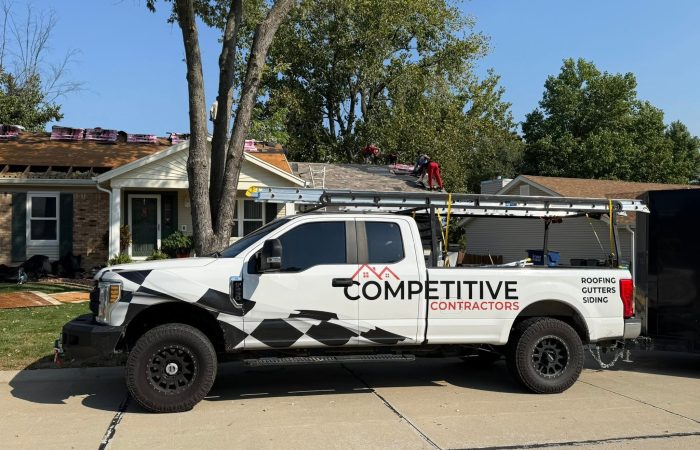
Right after a hailstorm, a roof with real damage can look completely normal from the driveway. What’s actually happened at the shingle level is more subtle: granule loss exposing the asphalt mat underneath, hairline fractures in the shingle itself, and bruised spots where the mat has been weakened without fully cracking.
None of this leaks yet. None of it is visible without getting close. This is exactly the window where the cost of fixing the problem is lowest, and exactly the window most homeowners skip, because nothing yet seems wrong.
This is where the damage stops being purely cosmetic. Granules that were knocked loose continue washing into gutters every time it rains, thinning the shingle’s UV protection further with each storm. Hairline cracks from the original hail impact begin to widen under normal thermal expansion and contraction — Missouri’s swing between summer heat and winter cold is rough on already-weakened shingles.
Small gaps at fracture points start letting in trace amounts of moisture. It’s not enough yet to show up as a stain, but it’s enough to begin saturating the felt underlayment beneath the shingles, which is the layer designed to be your roof’s last line of defense if the shingle itself fails.
Somewhere in this window, for most unrepaired hail damage, water stops being absorbed by the underlayment and starts finding an actual path through it. This is when homeowners typically notice their first real sign of trouble: a faint discoloration on a ceiling, a musty smell in an attic, or insulation that feels damp to the touch during a routine check.
The frustrating part is that the entry point on the roof and the stain inside the house are rarely directly above each other. Water travels along the decking before it drips, so by the time it’s visible inside, it’s often already spread well beyond the original hail impact.
Left unaddressed past this point, the damage stops being a roofing problem and becomes a building problem. Plywood or OSB decking that’s been wet repeatedly starts to delaminate and soften, losing its structural integrity. Mold can establish itself in attic insulation and framing, which introduces an air quality and remediation cost separate from the roof itself. In severe cases, prolonged moisture intrusion compromises roof framing, which is a different category of repair entirely from anything related to shingles.
At this stage, what could have been a few hundred dollars in shingle repair has, in cases we’ve seen across St. Charles County, turned into a project involving full roof replacement, deck replacement, insulation removal, mold remediation, and interior drywall and paint repair — often five to ten times the cost of the original fix.
There’s a financial trap specific to waiting that goes beyond repair costs: most Missouri homeowner policies require damage to be reported within a defined window, often one year from the date of the storm, sometimes less depending on the carrier. Wait too long, and even damage that would have been a straightforward covered claim can be denied outright, or reduced, because the insurer can no longer verify it was caused by that specific storm event rather than ordinary wear.
Worse, secondary damage caused by neglect, like the mold and decking failure described above, is sometimes excluded from coverage entirely on the theory that a reasonable homeowner would have addressed the original problem sooner. In other words, waiting doesn’t just risk a bigger repair bill. It risks losing coverage for that repair bill altogether.
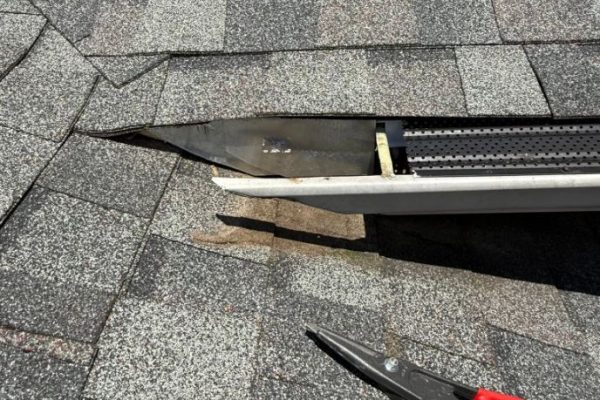
Two local factors accelerate this timeline compared to milder climates. First, Missouri’s significant seasonal temperature swings mean a hairline shingle crack experiences far more expansion-and-contraction stress per year than the same crack would in a climate with milder winters, which speeds up how quickly minor damage becomes major damage. Second, St. Charles County’s storm pattern means a roof with existing unrepaired hail damage is statistically likely to face another severe weather event before a homeowner gets around to addressing the first one, compounding the problem before it’s ever fixed.
The value of catching this early isn’t abstract. On a roof inspected within weeks of a storm, the typical finding is a handful of cracked or bruised shingles, fixable with targeted replacement of those specific shingles rather than a full re-roof. On a roof left unaddressed for a year or more, the typical finding includes saturated underlayment, early decking softness, and damage that’s spread well beyond the original impact zone, which usually means a much larger scope of work.
The difference in those two outcomes, for the same original storm, often comes down entirely to timing rather than the severity of the original hail. This is also where the inspection itself matters as much as the timing. At Competitive Contractors LLC, we’ve built our process around catching exactly this kind of early-stage, easy-to-miss damage, rather than doing a quick walk-through and calling it done. That thoroughness is what keeps a small storm from quietly becoming an expensive one, and it’s why homeowners across St. Charles, St. Peters, and O’Fallon call us back the next time a storm rolls through.
Don’t sign anything at your door. After a major storm in St. Charles County, out-of-town storm chaser contractors knock on doors within hours — sometimes the same day. They offer fast inspections and push for contract signatures before homeowners have had time to assess anything. Do not sign a contractor agreement, a direction to pay, or an assignment of benefits at your door after a storm. Get your own inspection first.
Don’t file before you have independent documentation. Once your claim is open, the insurer’s adjuster sets the baseline. Items missed in that initial assessment are difficult to add later without your own documentation showing they were storm-related. Document first, then file.
Don’t assume your car damage isn’t worth filing. Auto hail damage from a significant storm is frequently more extensive than it appears. Dozens of small dents across a hood and roof can represent $3,000–$8,000 or more in repair value. A free inspection will tell you what the damage is actually worth before you decide.
Don’t accept the first settlement offer without review. Initial settlement offers — for both auto and roof claims — are frequently incomplete. Review any offer against your contractor’s documentation before accepting. Supplement requests are a normal and legitimate part of the claims process.
Don’t use two separate contractors if you don’t have to. Managing two parallel repair processes while also handling two insurance claims is significantly more stressful than it needs to be. If one contractor can handle both, use them.
The sooner your damage is professionally documented, the stronger your claim and the earlier you get on the repair schedule.
By the time a leak appears inside your home, the damage has already been compounding for some period. Proactive inspection protects both your property and your insurance options.
Policies vary by carrier and some have shorter reporting windows than others. A quick call to your insurance agent to confirm your claim filing window is worth the ten minutes.
If you have active water intrusion requiring immediate attention, temporary tarping is appropriate — and should be documented thoroughly. But permanent repairs should not begin before your independent inspection and insurance documentation are in place.
Look for granule buildup in your gutters that seems disproportionate to the roof’s age, any soft or discolored spots on interior ceilings, or a musty smell in your attic. The most reliable way is a hands-on inspection, since the early stages of this kind of damage are rarely visible from the ground.
It depends on your specific policy’s notice requirements, which vary by carrier and sometimes by the terms in effect when the storm occurred. Some policies allow up to a year or longer, others are stricter. Checking your policy documents or calling your insurer directly is the only way to know your actual window.
In some cases, yes. Many policies distinguish between damage from a sudden event and damage that resulted from a homeowner failing to address a known problem, and prolonged unrepaired leaks can fall into the latter category depending on the policy’s specific language and the insurer’s interpretation.
Not necessarily. A roof can show no exterior signs for well over a year while underlayment saturation and minor decking issues develop underneath. Visual inspection from the ground is not a reliable way to rule out hail damage.
Get a hands-on roof inspection as soon as possible. Even if too much time has passed for an insurance claim, identifying and stopping any ongoing moisture intrusion early limits how much additional damage accumulates while you sort out next steps.
Concerned that hail damage from a past storm might still be sitting unaddressed on your roof? A direct, no-pressure inspection from a contractor based in St. Charles County can tell you exactly where things stand, and what it would take to fix it properly.