
A neighbor’s roof gets replaced after a storm. Yours looks untouched. Same street, same storm — so what made the difference? Almost always, it comes down to one thing: the size of the hail that actually struck each roof, and what was already going on with the shingles underneath it.
We get this question on nearly every storm call in St. Charles County: “was that hail even big enough to do anything?” Here’s the honest, size-by-size answer.
— A St. Charles-based roofing contractor, writing from years of post-storm inspections across the county
A lot of homeowners assume hail damage is binary — either it wrecked your roof or it didn’t. In reality, each size threshold tends to cause a different kind of damage, not just “more” of the same:
That distinction matters because it changes what kind of repair you actually need, and whether it’s something to handle yourself, with insurance, or not at all.
Almost never the cause of a roof call on its own. We’ve inspected after storms with pea-size hail and found nothing worth repairing unless the roof was already in rough shape going in.
This is where it gets roof-specific rather than storm-specific. On a newer roof, marble-size hail usually leaves nothing visible. On a roof past the 12-15 year mark, we start seeing soft bruising where granules have been knocked loose, and that bruising is often the first crack in a shingle’s weather resistance.
This is the line the National Weather Service uses to call a storm “severe,” and it’s also roughly where we start recommending an inspection regardless of roof age. At this size, granule loss becomes consistent rather than spotty, and we’ll often find soft, mat-level bruising even on roofs installed within the last five years.
By this point we’re not asking “is there damage,” we’re documenting where. Golf ball hail routinely fractures the shingle mat, dents aluminum flashing and vent caps, and at this size we’ll usually also find damaged gutters and AC condenser fins in the same yard — useful corroborating evidence if a claim comes later.
This is when shingles crack outright instead of bruising, and exterior damage becomes obvious without climbing anything — siding dents, broken window screens, sometimes cracked skylights. Roofs hit at this size or larger in St. Charles County have almost always needed a full section replaced, not a patch.
Rare, but it happens in the St. Louis metro a handful of times most decades. At this size we’ve seen punctured shingles and, occasionally, exposed decking. If your area got hail this large, a full inspection isn’t optional — it’s expected.
Here’s the part that doesn’t fit neatly into a size chart: two houses on the same St. Charles street, hit by the same storm, can come out completely differently depending on what their roofs looked like before the hail arrived.
A roof that’s already lost granules to sun and age has less cushioning between the hailstone and the shingle mat underneath. We’ve inspected 10-year-old roofs that took real damage from 3/4-inch hail, right next to a 2-year-old roof on the same block that shrugged off 1-inch hail without a mark. Size tells you the energy of the impact. Roof condition tells you how much of that energy the shingle could absorb.
St. Charles County sits in a corridor that regularly catches severe cells tracking east through the St. Louis metro, frequently producing hail in the half-inch to golf-ball range during spring and summer. We see this pattern consistently across St. Charles, St. Peters, O’Fallon, Cottleville, Weldon Spring, and Wentzville — storms that look similar on radar can still hit individual neighborhoods with very different hail sizes depending on the exact path of the cell.
That’s part of why “my neighbor’s insurance company sent someone out” isn’t a reliable signal either way. Hail size genuinely varies block to block within the same storm.
If you weren’t home or didn’t catch it in the moment, these are reliable indicators:
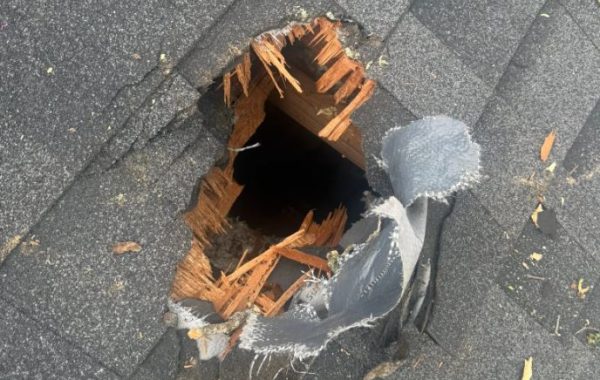
If your area saw quarter-size hail or larger, get an inspection — even if your roof looks fine from the driveway. Most of the damage that matters (mat fractures, granule loss, soft bruising) isn’t visible from ground level.
If your area saw anything smaller, and your roof is under about 10 years old, it’s reasonable to skip the inspection unless you’re seeing other warning signs like dented gutters or AC damage.
If your roof is older than 12-15 years regardless of hail size, it’s worth a look. Age narrows the gap between “minor hail” and “real damage” more than most homeowners expect.
Don’t sign anything at your door. After a major storm in St. Charles County, out-of-town storm chaser contractors knock on doors within hours — sometimes the same day. They offer fast inspections and push for contract signatures before homeowners have had time to assess anything. Do not sign a contractor agreement, a direction to pay, or an assignment of benefits at your door after a storm. Get your own inspection first.
Don’t file before you have independent documentation. Once your claim is open, the insurer’s adjuster sets the baseline. Items missed in that initial assessment are difficult to add later without your own documentation showing they were storm-related. Document first, then file.
Don’t assume your car damage isn’t worth filing. Auto hail damage from a significant storm is frequently more extensive than it appears. Dozens of small dents across a hood and roof can represent $3,000–$8,000 or more in repair value. A free inspection will tell you what the damage is actually worth before you decide.
Don’t accept the first settlement offer without review. Initial settlement offers — for both auto and roof claims — are frequently incomplete. Review any offer against your contractor’s documentation before accepting. Supplement requests are a normal and legitimate part of the claims process.
Don’t use two separate contractors if you don’t have to. Managing two parallel repair processes while also handling two insurance claims is significantly more stressful than it needs to be. If one contractor can handle both, use them.
The sooner your damage is professionally documented, the stronger your claim and the earlier you get on the repair schedule.
By the time a leak appears inside your home, the damage has already been compounding for some period. Proactive inspection protects both your property and your insurance options.
Policies vary by carrier and some have shorter reporting windows than others. A quick call to your insurance agent to confirm your claim filing window is worth the ten minutes.
If you have active water intrusion requiring immediate attention, temporary tarping is appropriate — and should be documented thoroughly. But permanent repairs should not begin before your independent inspection and insurance documentation are in place.
Yes, and it’s common. Granule loss and shingle bruising both happen below what’s visible from the ground or even from a ladder in some cases. That’s why a hands-on inspection finds damage that a visual check from the yard misses.
Both matter. Adjusters generally want to confirm a documented severe weather event occurred (which is where hail size and NWS reports come in) and then assess actual damage on the roof itself. Having both pieces — confirmed storm data and a contractor’s documented findings — makes for a stronger claim.
Not necessarily. Hail size can vary meaningfully within the same storm and even the same block, and roof age plays a major role in outcome. The only way to know for your specific roof is an inspection.
Within a few days is ideal. Damage doesn’t always show as a leak right away, and getting ahead of it with documentation protects you if you decide to file a claim later.
Missouri-licensed and insured · Based in St. Charles County · No-pressure inspections · Not a storm chaser
Competitive contractors look at the actual storm data for your address alongside what we find on your roof, and tell you straight whether it’s worth a repair, a claim, or nothing at all.