
If you’ve gotten a roofing estimate in St. Charles County recently, there’s a good chance someone mentioned “Class 4 shingles” and an insurance discount in the same breath. It sounds like an upsell. Sometimes it is one. But the rating itself is a real, independently tested standard — and whether it’s worth paying for depends on math that’s specific to your situation, not a blanket yes or no.
Here’s what the rating actually measures, what it doesn’t, and how to figure out if it pencils out for your home.
— Written by a roofing contractor based in St. Charles, MO
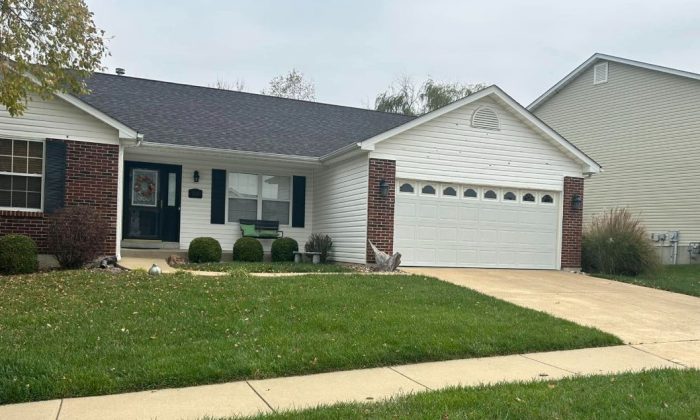
Class 4 isn’t a marketing term a manufacturer invented. It comes from a real testing standard — UL 2218 — where steel balls of increasing size are dropped onto a shingle sample from a fixed height to simulate hailstone impact. Shingles get rated Class 1 through Class 4 based on how much impact they withstand without cracking or splitting. Class 4 is the highest rating available, meaning the shingle passed the test using a 2-inch steel ball, roughly the size of a large hailstone.
What that test does not tell you: how the shingle holds up over 20 years of sun exposure, how it performs in high wind, or whether it’ll look the same after impacts that don’t crack it but do dent or bruise it cosmetically. The rating is specifically about resistance to cracking from a single hard impact — nothing more, nothing less.
Most Class 4 shingles achieve the rating one of two ways. Some use a thicker, more rigid asphalt mat with reinforced fiberglass layers. Others use a modified asphalt — sometimes called SBS (styrene-butadiene-styrene) rubberized asphalt — that flexes and absorbs impact instead of cracking on contact, similar to how a rubber mallet doesn’t shatter the way a hammer would.
The SBS-modified versions tend to perform better in practice, particularly in a market like St. Charles where temperature swings between winter and summer are significant. Rigid materials that resist impact well in lab conditions can become more brittle in cold weather, which matters here in a way it might not in a milder climate.
Missouri isn’t a state where Class 4 roofing is a nice-to-have novelty — it’s a state where the underlying risk the rating addresses is genuinely common. St. Charles County sits in a corridor that regularly sees severe thunderstorm cells producing damaging hail, and Missouri consistently ranks among the more hail-active states nationally. That’s the entire reason the insurance incentives discussed below exist in the first place: insurers in Missouri have enough claims data to know that impact-resistant roofing measurably reduces their payouts here.
This is different from, say, installing Class 4 shingles in a coastal state where the bigger roofing risk is wind and salt exposure, not hail. In Missouri, the rating is addressing the actual primary threat to your roof.
Many Missouri insurers offer a premium discount for Class 4 roofing, but the structure of that discount varies more than most homeowners realize, and the differences matter:
Some insurers apply a flat percentage discount to your annual premium, which can run anywhere from a few percent to 15-20% depending on the carrier. Others adjust your hail/wind deductible specifically rather than your overall premium. A few carriers offer both. The discount also typically requires documentation — proof of the shingle’s Class 4 certification and sometimes a contractor’s installation affidavit — submitted at the time of installation or renewal.
The honest advice here: call your specific insurer before you buy the shingles, not after. Ask exactly what discount applies, whether it’s premium or deductible-based, and what paperwork they require. We’ve seen homeowners install Class 4 roofing expecting a discount that their specific carrier doesn’t actually offer, which changes the math significantly.
Class 4 shingles typically run somewhere between 10% and 20% more than a comparable standard architectural shingle, though the exact gap depends on the brand and whether you’re comparing against a basic three-tab shingle or a mid-grade architectural one. On an average St. Charles County roof, that often translates to a few hundred to around a thousand dollars more in material cost, before labor.
Where the real financial case gets made is over time, not at installation. If your insurer offers a meaningful premium discount, that savings compounds every year you own the home. Combine that with reduced odds of needing a full hail-damage replacement in a hail-prone county, and the upfront premium can pay for itself well before the shingle reaches the end of its rated life.
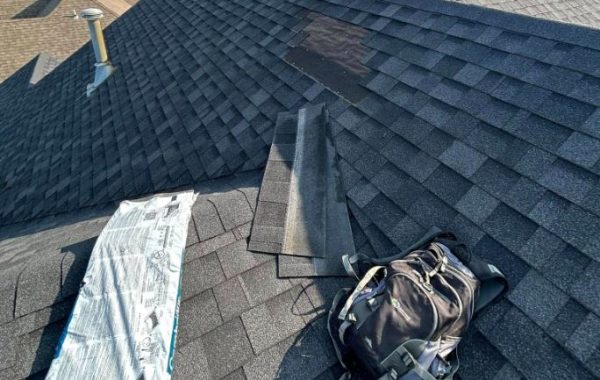
It tends to make the most financial sense if you plan to stay in your home long-term, since the insurance savings need time to accumulate past the upfront cost difference. It’s also a stronger case if your current insurer offers a substantial, confirmed discount, rather than a token one. And it’s worth strong consideration if you’re already replacing your roof for another reason — at that point you’re comparing the incremental cost of upgrading, not the full cost of a new roof.
If you’re planning to sell within the next few years, the insurance savings won’t have time to offset the higher material cost, and most buyers don’t pay a meaningful premium for Class 4 roofing on resale. If your insurer’s discount is minimal or you’re unable to confirm one exists for your policy, the financial case weakens considerably. And it’s worth saying plainly: Class 4 shingles reduce the likelihood of cracking, but they don’t make a roof hail-proof. Large enough hail can still cause cosmetic damage or, in rare extreme cases, real damage even to a Class 4 roof.
Given how regularly St. Charles County sees hail-producing storms, the question isn’t really “will my roof ever face a hail event” — it’s “when it does, do I want the shingle most likely to survive it without cracking, and is the insurance math in my favor.” For a lot of homeowners in this area, especially those installing a new roof regardless of the Class 4 decision, the answer ends up being yes. For homeowners just trying to decide between upgrading an otherwise-fine roof purely for the discount, it’s worth running the actual numbers with your insurer first.
Don’t sign anything at your door. After a major storm in St. Charles County, out-of-town storm chaser contractors knock on doors within hours — sometimes the same day. They offer fast inspections and push for contract signatures before homeowners have had time to assess anything. Do not sign a contractor agreement, a direction to pay, or an assignment of benefits at your door after a storm. Get your own inspection first.
Don’t file before you have independent documentation. Once your claim is open, the insurer’s adjuster sets the baseline. Items missed in that initial assessment are difficult to add later without your own documentation showing they were storm-related. Document first, then file.
Don’t assume your car damage isn’t worth filing. Auto hail damage from a significant storm is frequently more extensive than it appears. Dozens of small dents across a hood and roof can represent $3,000–$8,000 or more in repair value. A free inspection will tell you what the damage is actually worth before you decide.
Don’t accept the first settlement offer without review. Initial settlement offers — for both auto and roof claims — are frequently incomplete. Review any offer against your contractor’s documentation before accepting. Supplement requests are a normal and legitimate part of the claims process.
Don’t use two separate contractors if you don’t have to. Managing two parallel repair processes while also handling two insurance claims is significantly more stressful than it needs to be. If one contractor can handle both, use them.
The sooner your damage is professionally documented, the stronger your claim and the earlier you get on the repair schedule.
By the time a leak appears inside your home, the damage has already been compounding for some period. Proactive inspection protects both your property and your insurance options.
Policies vary by carrier and some have shorter reporting windows than others. A quick call to your insurance agent to confirm your claim filing window is worth the ten minutes.
If you have active water intrusion requiring immediate attention, temporary tarping is appropriate — and should be documented thoroughly. But permanent repairs should not begin before your independent inspection and insurance documentation are in place.
No. It means the shingle resisted cracking under a standardized impact test using a 2-inch steel ball. Larger hail, or hail combined with high wind, can still cause damage, including cosmetic granule loss or dents, even on a Class 4 roof.
No, it varies by carrier, and even among those that do offer one, the size and structure of the discount differs. Confirm directly with your insurer before assuming a discount applies to your policy.
No, it’s not a building code requirement here. It’s an optional upgrade some homeowners choose for the durability and potential insurance savings, not a mandated standard.
Most are rated similarly to comparable architectural shingles, generally in the 25-30 year range depending on the manufacturer and product line, though actual lifespan depends on installation quality, ventilation, and weather exposure over time.
Not reliably from the ground. The rating isn’t visually obvious, so checking your roofing invoice, manufacturer documentation, or having a contractor confirm the product during an inspection is the only reliable way to know.
Missouri-licensed and insured · Based in St. Charles County · Honest cost-benefit guidance · Not a high-pressure sales pitch
Competitive contractors will walk you through real numbers for your specific roof — material cost, your insurer’s actual discount, and whether it makes sense for your timeline. No pressure either way.